Product type
White-label, multi-provider home services marketplace source foundation.
White-label source package · Updated August 12, 2026
Launch a multi-provider home services marketplace with separate Flutter customer and provider apps, a web owner portal, and a connected API—without beginning from an empty project.
Source access, customization scope, deployment, and commercial terms are discussed directly.
An on-demand home services app script is a pre-built software foundation for customer booking, provider operations, and marketplace administration.
Monolith at a glance
Monolith connects the customer, service provider, and marketplace operator around the same booking and job record. These facts describe the current source package and are intentionally consistent with the demo, documentation, and product schema.
White-label, multi-provider home services marketplace source foundation.
Flutter customer app, Flutter provider app, and web owner and admin portal.
Flutter, Node.js, Fastify, TypeScript, PostgreSQL, and web-based administration.
Discovery, provider availability, booking, assignment, field progress, messages, quotes, payments, reviews, and support.
Entrepreneurs, agencies, and service businesses launching a branded marketplace.
Working source plus buyer-specific branding, integrations, compliance, QA, hosting, and store release.
What is included
Monolith is a working multi-application product foundation, not a collection of disconnected interface templates.
Service categories, search, provider discovery, booking, visit status, support, payment choices, reviews, and service history in one branded app.
Separate access for provider managers and technicians, with schedules, availability, assigned visits, job actions, photos, quotes, messages, and earnings visibility.
A business workspace for customers, catalogue, provider network, bookings, assignments, payments, support, branding, plans, and operational decisions.
A tenant-aware Node.js and Fastify API backed by PostgreSQL, with migrations, role boundaries, operational records, uploads, notifications, and audit history.
Real product applications
A booking begins in the customer app, moves through assignment and field work, and remains visible to the operator from request to payment and service history.
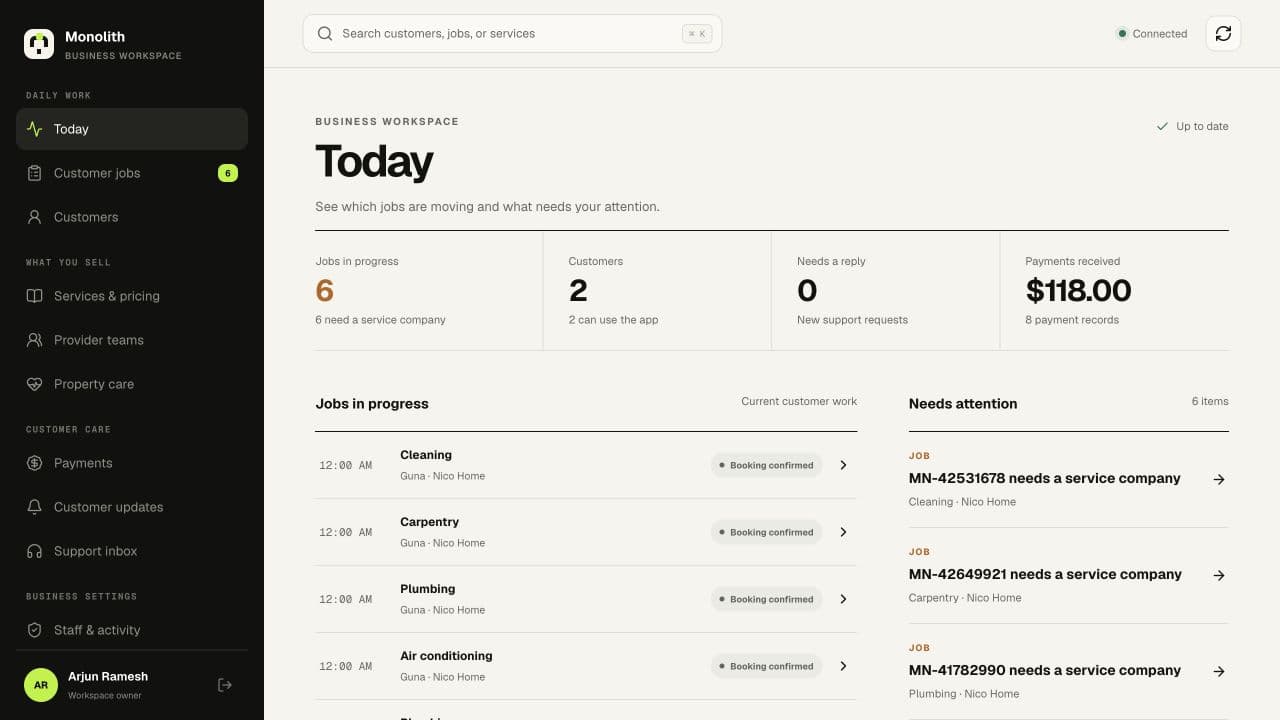
Web admin portal
Manage service content, customers, providers, availability, bookings, assignment, progress, payments, support, brand, and tenant controls.
Real owner workspaceFlutter customer app
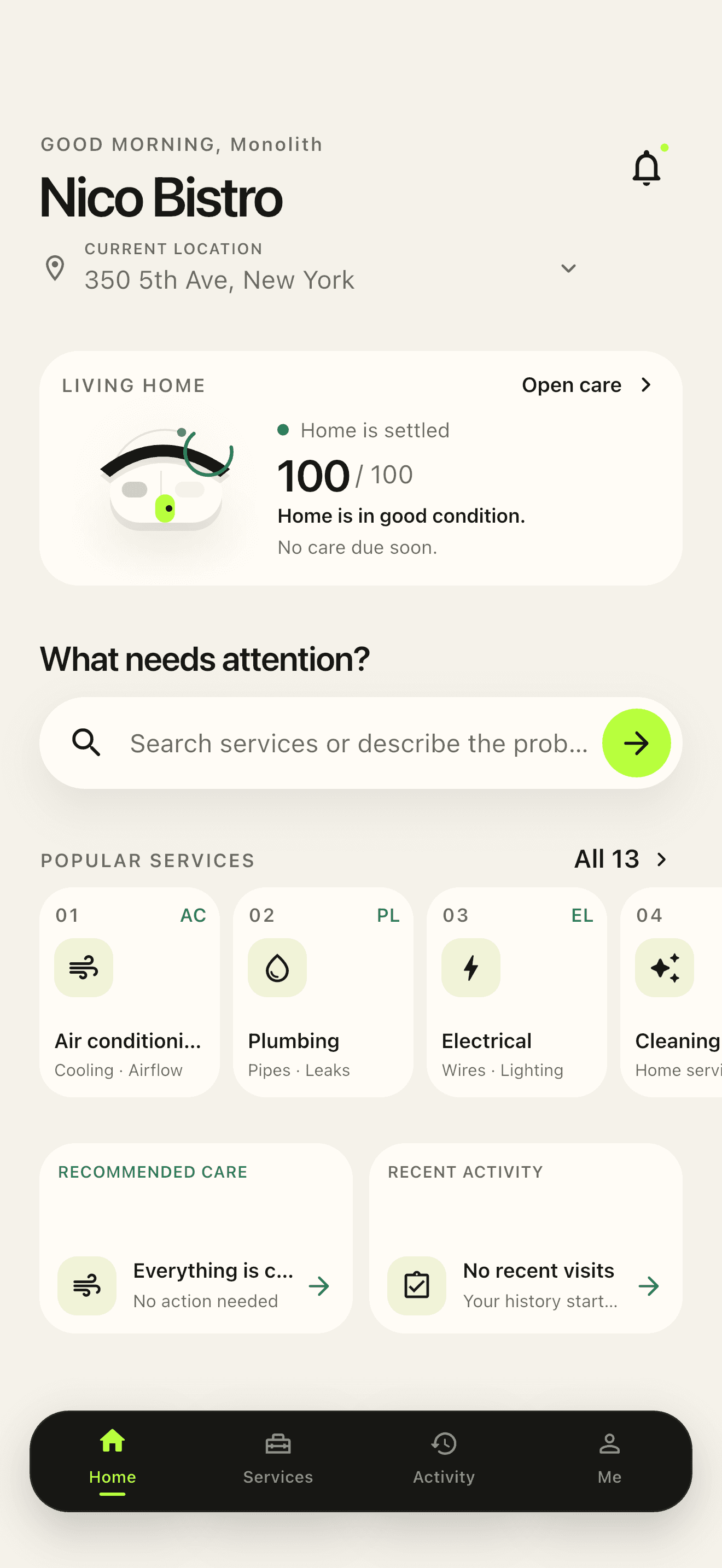
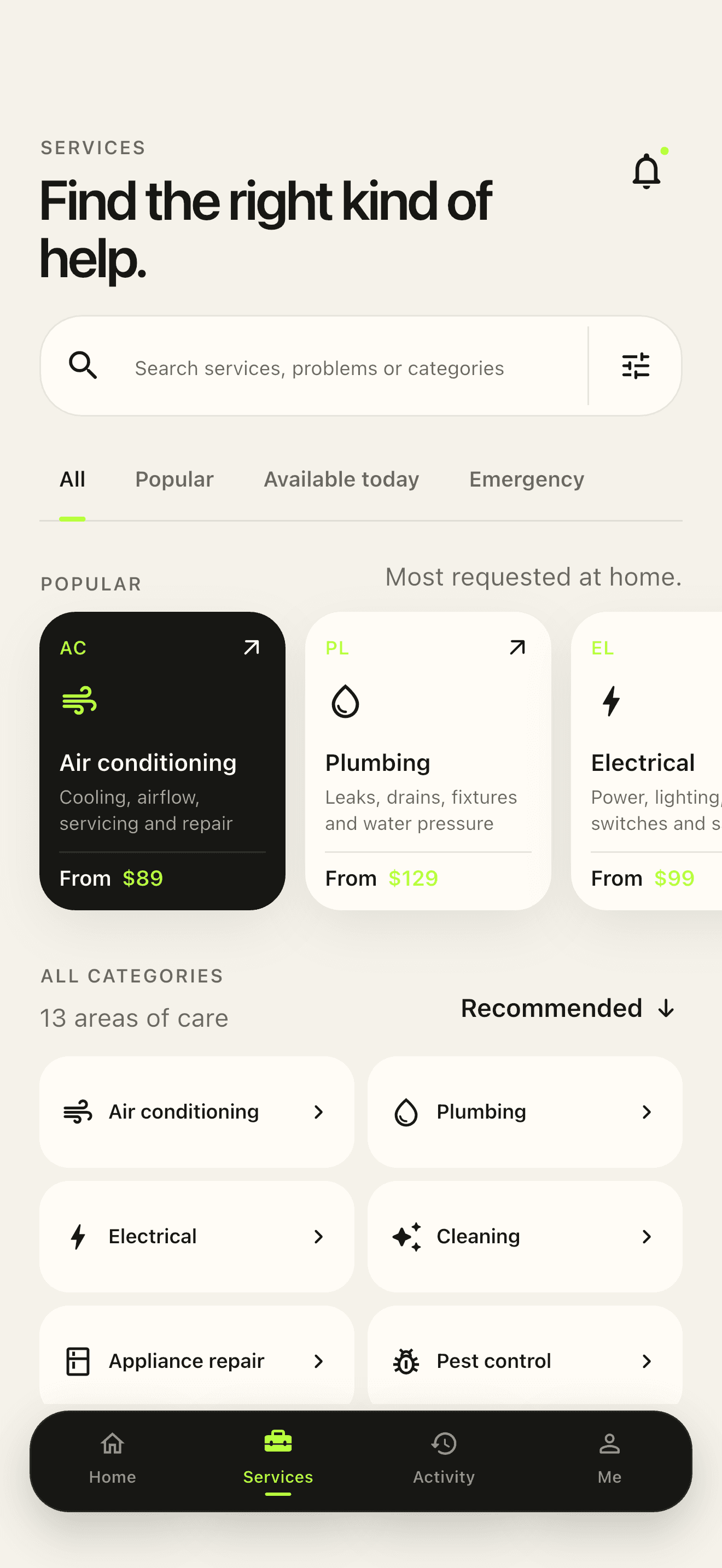
Customers browse categories and providers, build a complete request, choose availability and payment, then follow the visit and its history.
Flutter provider app
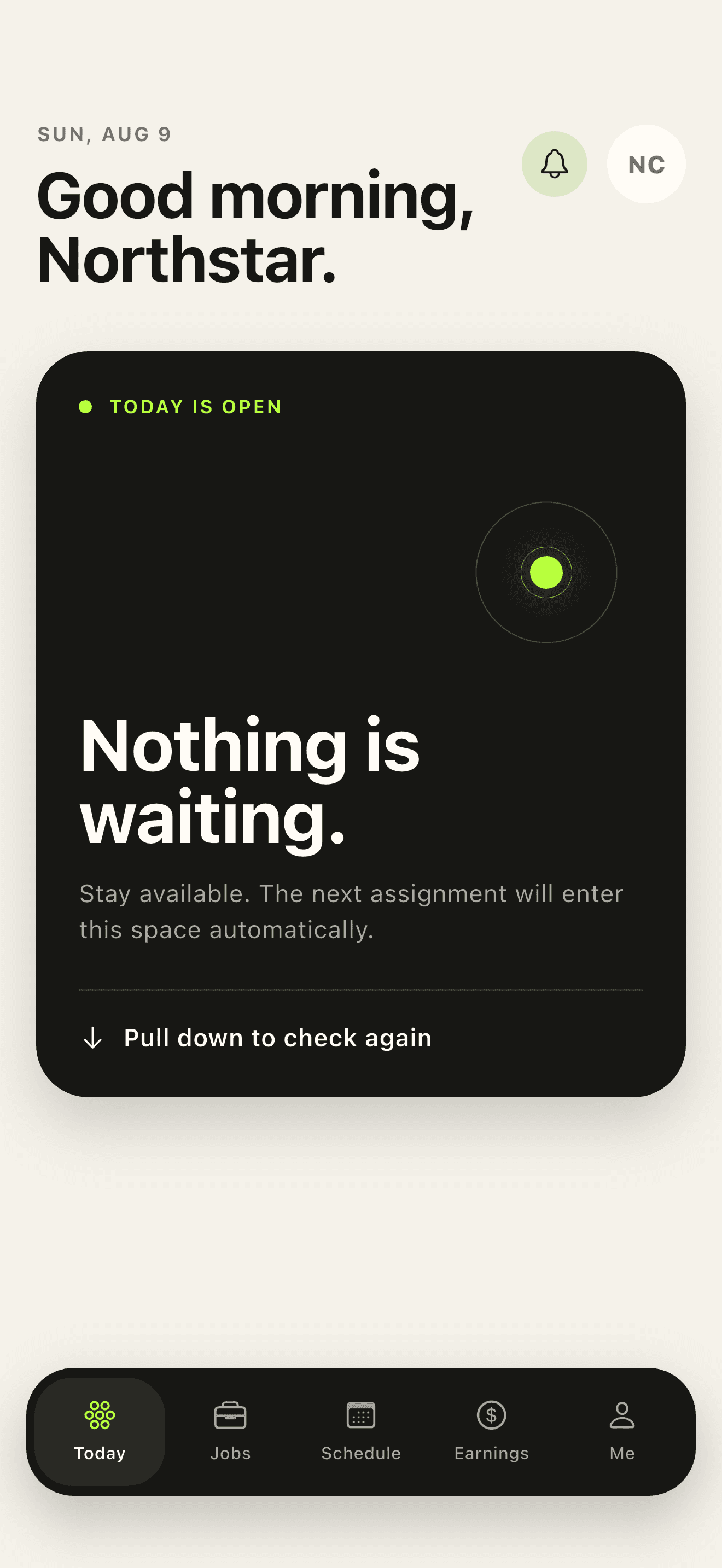
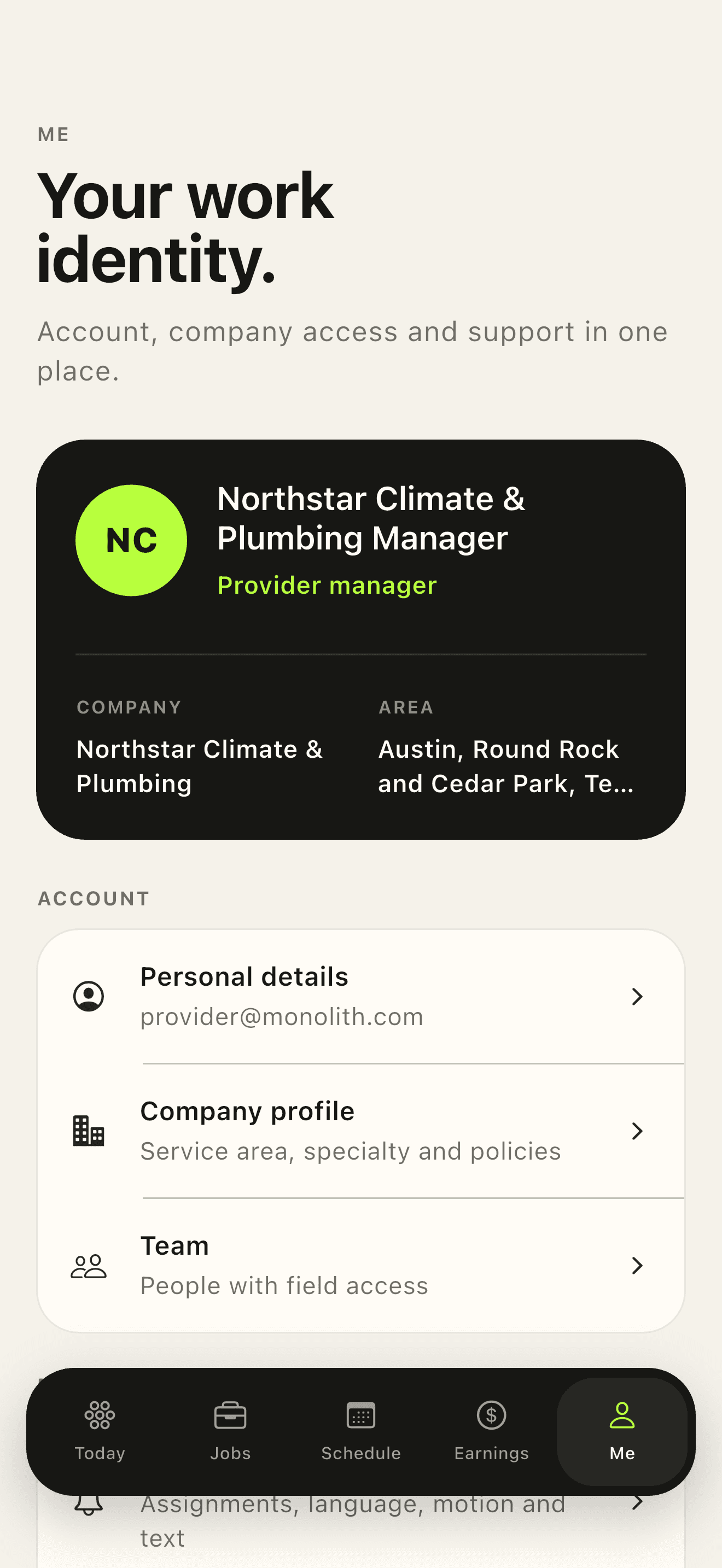
Provider managers and technicians see their workday, availability, job details, customer context, visit actions, evidence, quotes, messages, and earnings.
From source to production
A serious marketplace is not production-ready merely because it compiles. Buyer-owned accounts, rules, compliance, testing, and release approval remain part of implementation.
Use the customer app, provider app, owner portal, API, database model, tests, and deployment documentation as the implementation baseline.
Configure services, operating areas, provider onboarding, commissions or fees, legal policies, identity checks, visual identity, domains, and app identifiers.
Register Firebase apps, supply payment and messaging credentials, configure maps or tracking, choose media storage, enable monitoring, and validate webhooks and notification delivery.
Run end-to-end QA on real devices, complete privacy and security checks, prepare store assets, sign the releases, and submit the iOS and Android apps for review.
Buyer questions
These details describe the current product honestly; the implementation proposal defines any additional integrations.
An on-demand home services app script is a pre-built software foundation for a marketplace where customers discover and book services, providers manage and complete jobs, and operators control the business through an admin portal. It reduces the amount of product, design, and engineering work required before customization and launch.
The package includes separate Flutter customer and provider applications, a web-based owner and admin workspace, a Node.js and Fastify API, a PostgreSQL data model and migrations, and connected workflows for catalogue discovery, provider availability, booking, job progress, messages, quotes, payments, reviews, support, and white-label configuration.
The working product and source foundation are included, but every buyer still needs production configuration and release work. This includes buyer-owned service credentials, Firebase app registration, signing, hosted media, payment validation, privacy and legal details, security review, and App Store and Google Play approval.
Yes. Customers receive a Flutter marketplace and booking app. Provider-company managers and technicians receive a separate Flutter app for assigned work, availability, visit progress, evidence, quotes, messages, and earnings visibility. Business owners use the web portal.
Yes. The architecture separates tenant data, branding, catalogue, subscriptions, licenses, and entitlements. Brand assets, service content, credentials, domains, bundle identifiers, and store listings are configured for the buyer during implementation.
Monolith is designed for entrepreneurs, software agencies, and established service businesses that want to launch a branded, multi-provider home services marketplace without designing every customer, provider, operator, API, and database workflow from the beginning.
The current product includes job-location and tracking workflows plus customer payment integration paths. A production Google Maps implementation and automated marketplace payouts such as Stripe Connect require buyer-specific accounts, compliance choices, credentials, webhooks, and launch validation; they are not represented as zero-configuration features.
See the working marketplace
Message us with your target market, required integrations, and branding. We will respond with a demo and implementation estimate.
Request the live demo